


Don’t Let Debt Drag You Down! Your Non-Litigation Playbook for Small Business in India
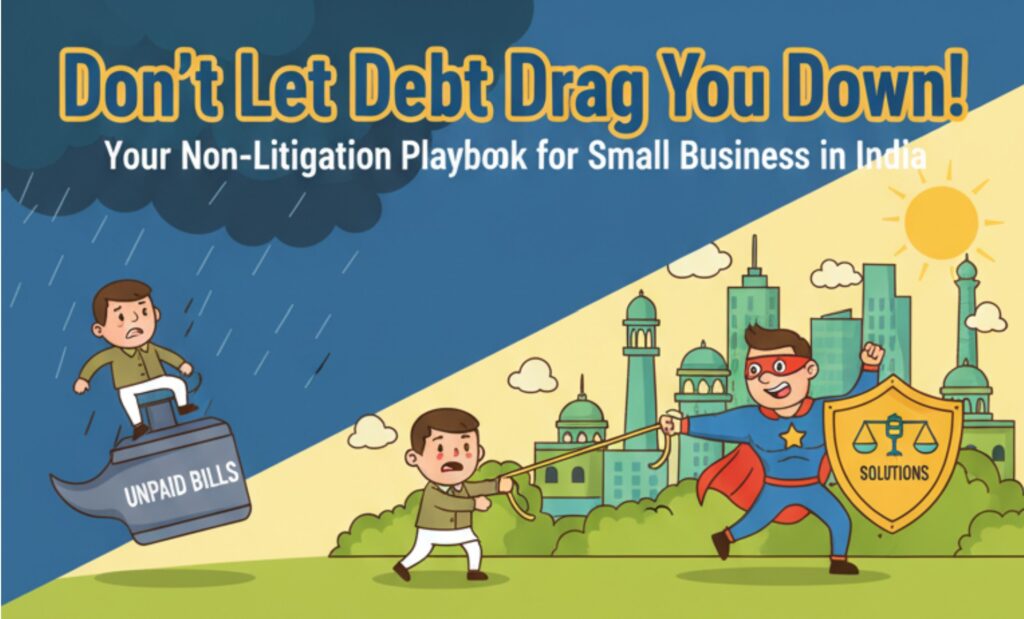
Don’t Let Debt Drag You Down! Your Non-Litigation Playbook for Small Business in India
Introduction: The Unpaid Bill Blues – A Small Business Nightmare
Ever stared at a pile of unpaid invoices, feeling that familiar knot of dread in your stomach? You’re not alone! For small businesses in India, outstanding debts aren’t just numbers; they’re cash flow killers, growth stiflers, and major headaches. I often wonder, is this stress a part and parcel of being an entrepreneur in our country?
Traditional court battles? Ugh. They’re slow, expensive, and can torch customer relationships faster than a Mumbai summer. I often think, there has to be a better way, a less adversarial way to get what’s rightfully yours.
Good news! We’re diving into a world where you can recover your hard-earned money without the courtroom drama. Welcome to the world of non-litigation debt recovery in India – smart, strategic, and surprisingly stress-free. I’ve heard whispers of these methods, but let’s really unpack how they work.
Why Skip the Courtroom? The Perks of Playing it Smart
- Time is Money (Literally!): Litigation can take years. Non-litigation methods? Often much faster, getting your cash back into your business quicker. The idea of spending years chasing a debt through the courts makes my head spin.
- Keep Your Customers (and Your Sanity): These methods focus on amicable solutions, helping you preserve valuable business relationships. No one wants to sue their best client! It seems like a no brainer to maintain the dignity of the relationship and pursue a resolution in good faith.
- Cost-Effective & Confidential: Save on hefty legal fees and keep your financial dealings private. I feel like this point does not need further convincing, as it will save money and prevent any kind of image tainting.
The Big Picture: In India’s bustling economy, timely debt recovery is key to trust and stability (as noted by legal experts on platforms like mondaq.com and credgenics.com). It’s about more than just individual transactions; it’s about fostering a healthy business ecosystem.
Level 1: DIY Debt Recovery – Your First Moves
Build Your Fortress: Proactive Prevention is Key!
- Crystal Clear Contracts: Before you even start, make sure your agreements are rock solid. This means clear payment terms, due dates, interest/penalty clauses for late payments, and even dispute resolution clauses (practical tips, enterslice.com). It strikes me that spending a little extra time upfront on airtight contracts can save a mountain of trouble later.
- Know Your Customer: A quick background or credit check can save you a world of pain later (practical tips). The need to carry out due diligence before onboarding a new client cannot be emphasized more.
- Acknowledge This! For staggered payments, get periodic written acknowledgments of debt to keep things tidy (research). This feels like a crucial step that is often overlooked.
Friendly Nudges & Formal Warnings:
- The Gentle Reminder: Start with polite emails, SMS, or phone calls. Understand *why* they haven’t paid (research). Maybe there’s a simple misunderstanding or a temporary cash flow issue on their end.
- The Firm Handshake: Formal Demand Letters: If friendly fails, send a formal demand letter. This isn’t just a reminder; it’s a legal heads-up, outlining the debt and potential consequences (raizadaassociates.com, ananyalegal.com). It creates a crucial paper trail if things escalate. This is where things start to feel a bit more “official”.
- Document Everything! Seriously, every call, every email, every conversation. It’s your evidence locker (practical tips). I have realized that not documenting things properly could lead to more problems in the future.
Let’s Talk It Out: Negotiation & Settlement
- Flexible Payment Plans: Life happens! Offer a structured repayment schedule or an extension if they’re genuinely struggling. Document it, of course (practical tips). It’s about finding a solution that works for both parties, even if it means compromising a bit.
- The “Commercial Haircut”: Sometimes, a slightly reduced lump sum now is better than a full payment much, much later (or never). It frees up your cash flow (practical tips). This requires a shift in mindset – from demanding every last rupee to prioritizing cash flow.
- Expert Help: Companies like Settle Loan (settleloan.in) specialize in tailored debt settlement solutions, acting as intermediaries. I wonder how effective these companies are in practice.
Level 2: Calling in the Cavalry – Professional Help & ADR
When your direct efforts hit a wall, it’s time to bring in the pros.
Debt Collection Agencies: The “Soft but Firm” Approach
- When to Engage: If debts are 90+ days overdue or for significant amounts with strong documentation (practical tips). It feels like a critical threshold – when you’ve exhausted your own efforts and need outside assistance.
- Local Expertise: Agencies like Kenstone Capital (kenstonecapital.in) and Debt Nirvana (debtnirvana.com) specialize in Indian commercial debt recovery, working within local regulations. It’s important to choose agencies that understand the nuances of the Indian legal system.
- “No Win, No Fee”: Some platforms like Debitura (debitura.com) connect you with agencies on this risk-reducing model. This seems like a great way to align incentives – they only get paid if they recover your money.
- A Note on Identity: Remember, some firms (like India Debt Recovery, indialawyer.in, or Law Senate) are attorney-based services, not traditional collection agencies, offering legal means to resolve debt. It is imperative to understand which agency is best suited for you.
Alternative Dispute Resolution (ADR): Your Fast Track to Resolution
The ADR Advantage: Faster, cheaper, confidential, and relationship-preserving alternatives to courts (research, practical tips). Courts even prefer you’ve considered ADR! This sounds incredibly appealing compared to the drawn-out process of litigation.
Mediation: Everyone Wins (Hopefully!)
- How it Works: A neutral third party helps you and the debtor talk it out and reach a mutually agreeable solution (research). It’s voluntary and often non-binding, but highly successful.
- Under Indian Law: Governed by the Arbitration and Conciliation Act, 1996, and Section 89 of the Code of Civil Procedure, 1908. The brand-new Mediation Act, 2023, further solidifies its legal teeth, making mediated agreements enforceable as court judgments (High Court judgments, legal acts & provisions). This gives the process real teeth.
- Judicial Seal of Approval: The Delhi High Court in Anand Gupta & Anr. Vs M/S Almond Infrabuild Private Limited & Anr. cemented mediated settlements as binding and executable court orders – that’s serious power! This is extremely reassuring.
Arbitration: A Judge, Not a Jury (But Still Out of Court)
- How it Works: More formal than mediation. A neutral arbitrator hears both sides and delivers a *binding decision* (an ‘award’) (research).
- Under Indian Law: Also governed by the Arbitration and Conciliation Act, 1996. These awards are legally enforceable like court decrees (legal acts & provisions).
- High Court Insights: The Karnataka High Court handles challenges to international arbitration awards, while the Delhi High Court has clarified aspects like arbitration clause validity and grounds for challenging awards (High Court judgments). However, note the Supreme Court’s stance in Vidya Drolia v. Durga Trading Corporation that some debt recovery under special legislation might be non-arbitrable if public policy is involved. It’s good to know where these awards stand legally.
Conciliation: Similar to mediation, aiming for a negotiated settlement under a neutral third party, also under the Arbitration and Conciliation Act, 1996 (legal acts & provisions).
Level 3: India’s Secret Weapons for Small Businesses
MSME Samadhan: Your Express Lane to Recovery!
- The Law: The Micro, Small and Medium Enterprises Development (MSMED) Act, 2006, is a godsend for MSMEs.
- The Golden Rule: Debtors *must* pay MSMEs within 45 days of the invoice.
- No Pay? No Problem: If they don’t, you can approach the MSME Facilitation Council for conciliation or arbitration.
- Penalty Power: Delayed payments incur interest at *three times the RBI’s bank rate*! Boom! (research, legal acts & provisions, economictimes.com) This is a game changer for MSMEs! I never knew this existed.
Lok Adalats (People’s Courts): Simple, Speedy, Sweet
- The Concept: Established under the Legal Services Authorities Act, 1987, these forums facilitate amicable settlements for disputes, especially small-value loans (up to ₹20 lakh for banks) (research).
- Binding Outcomes: Any settlement reached is legally binding and non-appealable – a true win-win for quick resolution (research).
- DRT & Settlements: The Delhi High Court in Neeraj Syal v. State Bank of India emphasized that Debt Recovery Tribunals (DRTs) *must* acknowledge genuine settlements between banks and borrowers, streamlining debt recovery for NPAs (High Court judgments).
Future-Proofing Your Finances: Prevention is Better Than Cure
- Strong Foundations: Revisit those clear contracts, payment terms, and credit policies regularly.
- Tech Up! Use accounting software and online platforms to monitor receivables, send automated reminders, and track communications (practical tips, highradius.com).
- Continuous Learning: Stay updated on legal developments. Resources like credgenics.com, libertatem.in, and various law firm blogs (ssrana.in, indialawoffices.com, ahlawatassociates.com) are goldmines of information.
Conclusion: Reclaim Your Dues, Reclaim Your Peace of Mind!
Unpaid debts don’t have to be a death sentence for your small business. By understanding and leveraging India’s robust non-litigation options – from direct communication and professional agencies to powerful ADR mechanisms and special MSME provisions – you can recover your money efficiently, preserve relationships, and focus on what you do best: growing your business.
Don’t let those invoices gather dust. Take action, legally and smartly!
Disclaimer: This blog post provides general information and should not be considered legal advice. Always consult a qualified legal professional for your specific situation.
Ahmed Jamal Siddiqui
Advocate High Court
Contact : 9999077653